







An established practice
A review of two decades of research found visual activity schedules meet the bar as an evidence-based practice — building independence and skills that generalise from preschool to adulthood.
Visual Activity Schedules (ASAT)Turn the morning scramble into a clear, visual plan each child can follow — and feel proud to complete. Set it up together; let the picture do the reminding.

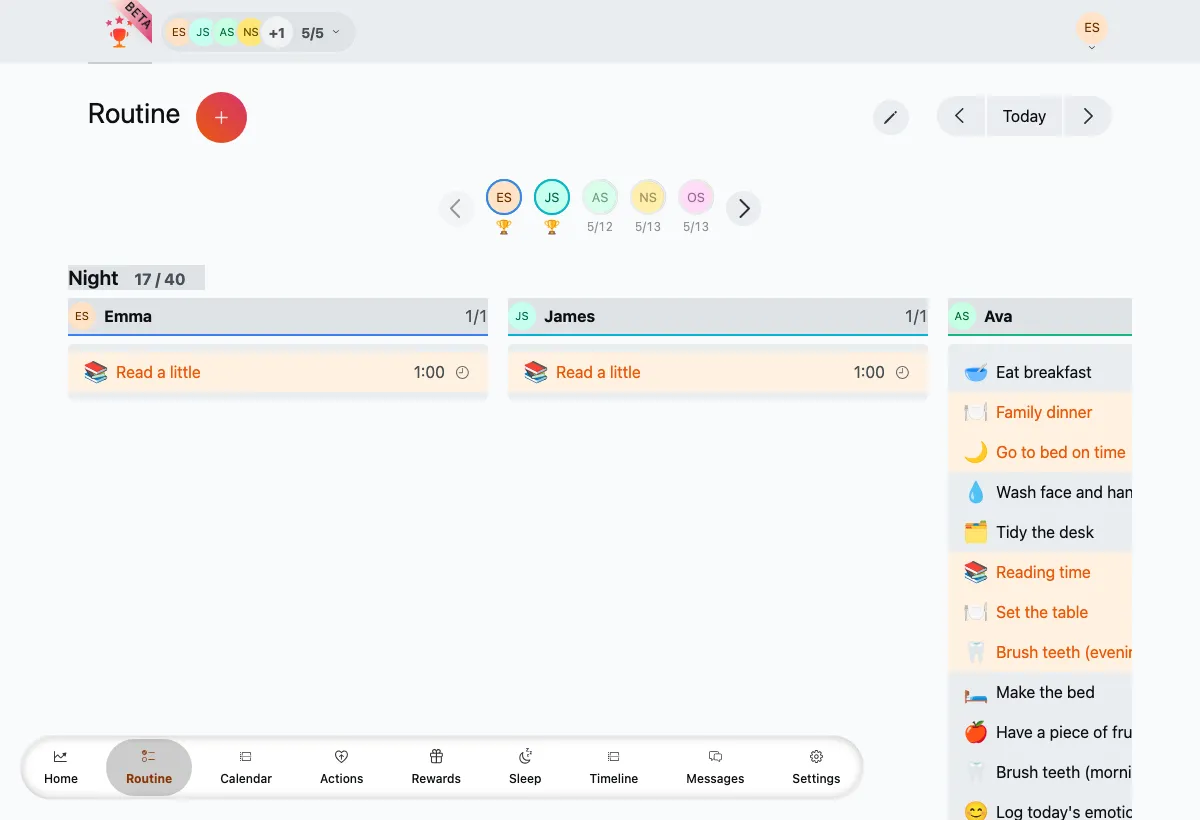
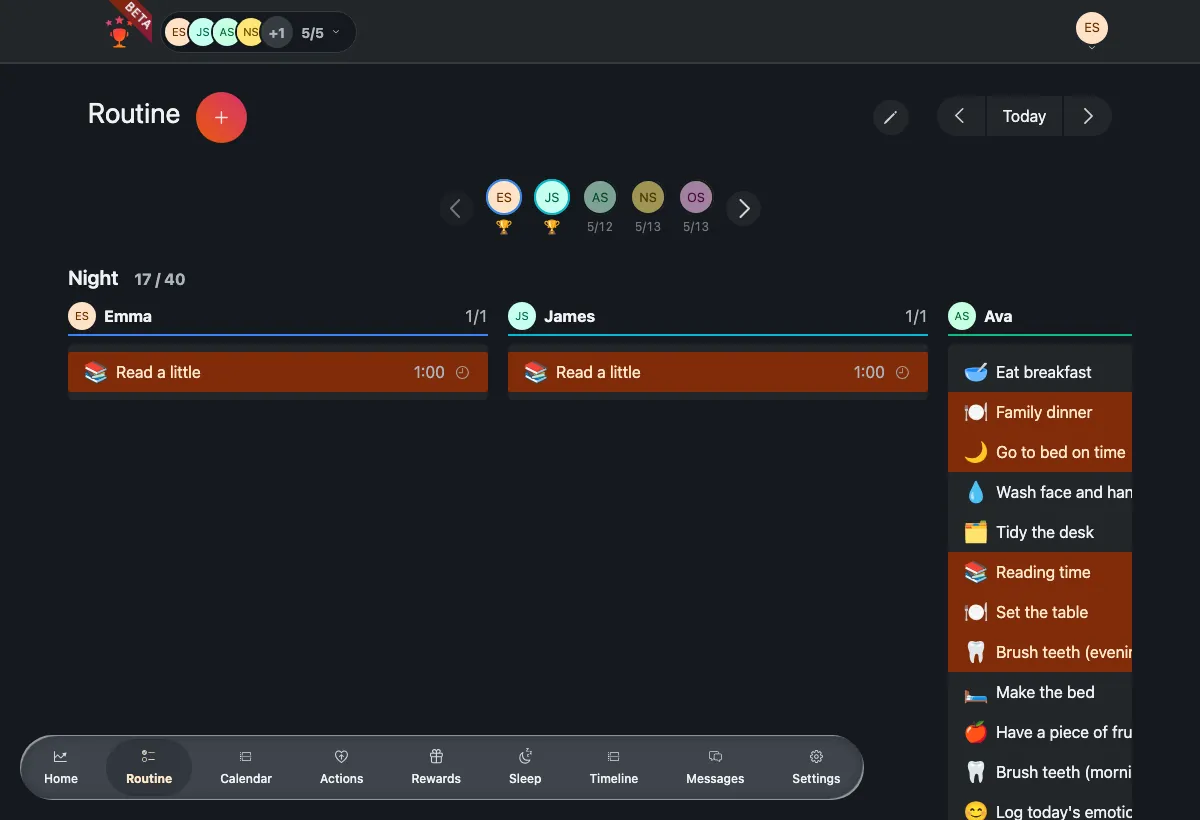
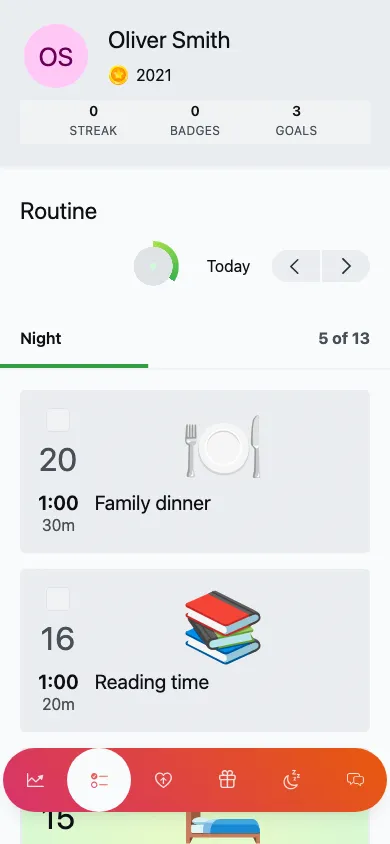
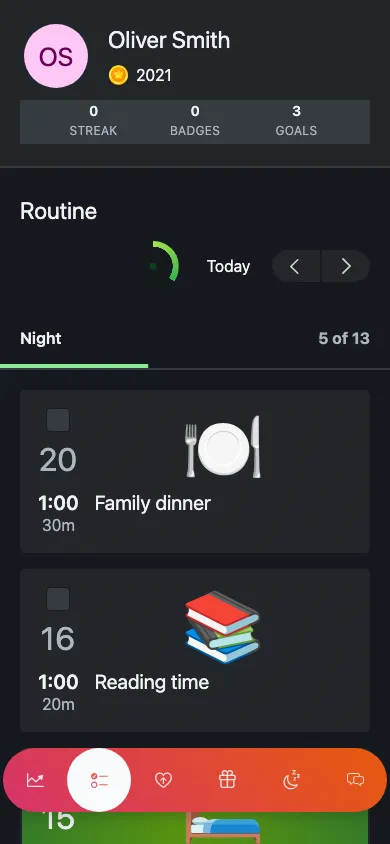
See it in action
How it works
Create weekly routines and one-off tasks for each child — morning, homework, chores, bedtime.
Every task gets an icon and a moment in the day, so the plan is a picture, not a lecture.
Kids tick tasks as they go, earn points, and watch the day fill in — no nagging required.


The evidence
Visual schedules aren’t a nice-to-have — they’re one of the most studied supports in child development, especially for neurodivergent kids.
A review of two decades of research found visual activity schedules meet the bar as an evidence-based practice — building independence and skills that generalise from preschool to adulthood.
Visual Activity Schedules (ASAT)When the day is visual and predictable, it stops being a series of surprises. Visual schedules reduce anxiety and ease the transitions that trip up ADHD and autistic children.
Visual schedules for ADHD & autismPlanning, sequencing, and holding steps in mind are exactly what many kids find hardest. A visual routine does the remembering, so the child can just do the next thing.
Visual Activity Schedules (ASAT)Each kid gets their own plan, tuned to their age and their day — and it grows with them.
Weekly plans and one-off tasks bend around sick days, trips, and the unexpected.
The whole family sees the same plan, so nobody’s carrying it all in their head.
Keep exploring
Free to set up. Add your kids, sketch out a morning, and watch it click into place.
No card needed · English & Português